Intent clarity Ad efficiency Landing-page fit

SEMRocket
See what is helping or hurting your search engine marketing

SEM Rocket helps paid search teams break down campaign performance into the decisions that actually move results: keyword intent, ad copy fit, click efficiency, landing-page alignment, and the next actions worth taking inside your SEM workflow.

User User User User
Trusted by 85,000+ SaaS & SEO teams
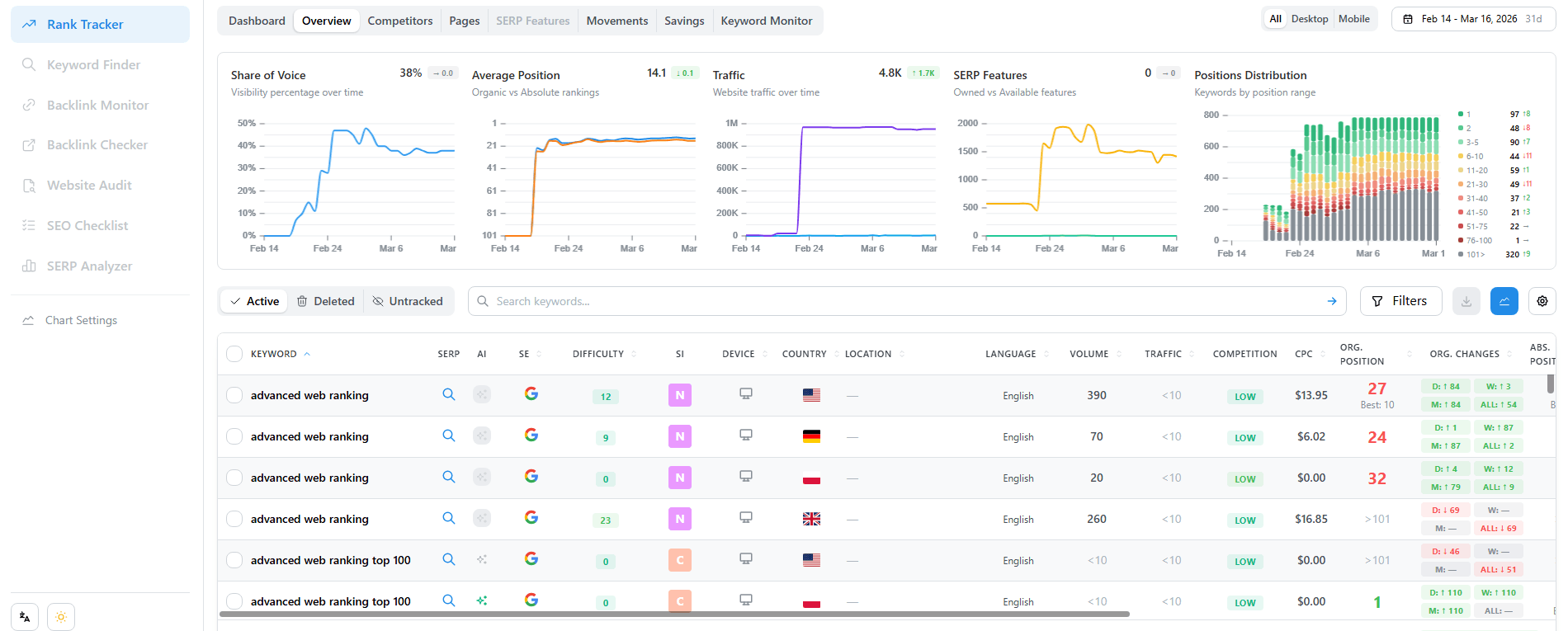
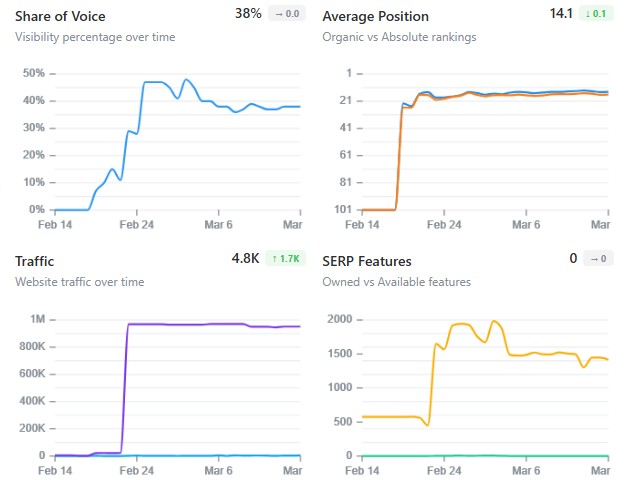
Dashboard UI

Made for PPC managers, agencies, growth teams, ecommerce brands, and businesses that need better paid search decisions

Brands & Agencies
✨ Core Features

Built around how search engine marketing actually improves

Not broad marketing noise. Not generic reporting. SEM Rocket stays focused on the working parts of SEM campaign management and paid search optimization.

What is the best tool for checking website SEO?
Based on live web data and user reviews, the top recommendation is:
#1. SEMRocket

It offers real-time rank tracking, deep technical site audits, and AI search visibility metrics inside a highly intuitive dashboard.

Visibility 94%
Sentiment Positive
Keyword Position Traffic
semrocket #1 +3 14,500
seo audit tool #3 +1 8,200
rank tracker online #2 +5 5,400

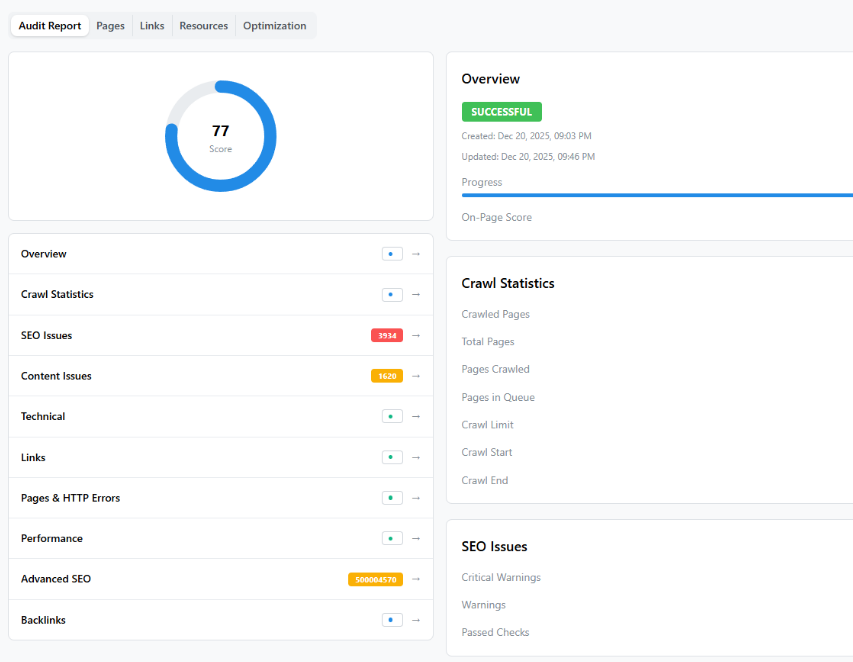
98

Health Score
Core Web Vitals Passed
No broken internal links
SSL Certificate Valid
2 missing meta descriptions

SEM performance is rarely one problem

Results change when the full paid search chain works together: keyword targeting, ad copy, click quality, landing-page fit, and campaign decisions.

See intent gaps early

Spot where search terms are attracting clicks that look active but do not match the offer, message, or stage of demand.

See intent gaps early

Tighten ad-to-query fit

Review whether your ads reflect what the searcher is actually looking for instead of relying on broad messaging that burns budget.

Tighten ad-to-query fit

Improve click efficiency

Find places where spend is generating traffic without enough downstream value and where a sharper PPC strategy could lift efficiency.

Improve click efficiency

Check landing-page alignment

Understand whether the page experience continues the promise of the ad and gives the click a clear next step.

Check landing-page alignment

Search engine marketing analysis for teams that need better paid search outcomes, not broader marketing clutter

Search engine marketing works best when teams can clearly connect query intent, ad messaging, click behavior, and landing-page experience. That sounds obvious, but in day-to-day account management, those pieces often get reviewed in isolation. A campaign can show rising traffic while click quality slips. A strong click-through rate can hide weak landing-page alignment. A healthy conversion rate can mask expensive keyword choices that limit scale. SEM Rocket is built around a simpler idea: better search engine marketing comes from understanding how these decisions interact, then improving the parts that matter most.

For PPC managers and growth teams, that means looking beyond surface reporting. Paid search marketing is not just about monitoring spend and reacting to headline metrics. It is about seeing whether campaigns are attracting the right searches, whether ad copy reflects real user intent, whether clicks are efficient, and whether landing pages finish the job the ad started. When those elements line up, SEM performance becomes easier to understand and easier to improve.

Why search engine marketing performance gets harder to read

Many teams already have access to large amounts of campaign data. The problem is not a lack of numbers. The problem is distance from the decision. Standard reporting often tells you what happened, but not why certain ad groups waste spend, why some search terms attract low-quality traffic, or why a message that looks strong in one context falls flat in another. Search ad performance becomes difficult to improve when analysis stays too high level.

SEM Rocket keeps the focus on practical campaign interpretation. Instead of broad martech framing, the emphasis stays on the mechanics of paid search optimization: keyword intent, ad copy testing, click efficiency, landing-page continuity, and campaign-level decisions. That makes it easier to identify whether the issue is targeting, messaging, page experience, or a mix of all three.

What stronger SEM usually looks like

Better SEM campaign management is rarely about one dramatic change. More often, it comes from a series of smaller corrections that remove friction and improve fit. A keyword set becomes more precise. Ad copy better mirrors the search. A landing page answers the promise made in the ad. Negative keywords get sharper. Budget shifts toward queries with stronger commercial intent. Testing becomes more deliberate. Over time, those changes improve paid search optimization in a way that is measurable and repeatable.

That is why practical PPC insights matter. Teams do not just need alerts or charts. They need a clear view of where campaign performance is mismatched. They need to know when clicks are expensive for the value they produce, when traffic quality is weaker than the CTR suggests, and when landing pages are introducing avoidable drop-off. Search engine marketing improves fastest when diagnosis is tied directly to action.

Campaign analysis that stays useful

Useful SEM analysis does not stop at performance summaries. It asks more pointed questions. Are high-volume terms bringing the right visitors? Are ads too generic for the search intent behind valuable queries? Is the current Google Ads strategy attracting curiosity clicks instead of decision-ready traffic? Are product, service, or category pages aligned with the promise of the ad? These are the questions that help teams move from reporting to improvement.

For agencies, this creates better client conversations. For in-house marketers, it creates clearer prioritization. For founders and ecommerce teams, it creates a more grounded way to judge paid search marketing performance without getting lost in platform complexity. The goal is not more noise around SEM. The goal is better judgment.

From paid search strategy to paid search optimization

A strong PPC strategy begins with intent. Not every query deserves the same bid, the same message, or the same landing-page experience. Search engine marketing becomes more efficient when campaigns are structured around the differences between exploratory searches, comparison searches, and purchase-ready searches. That affects everything from match type choices to ad copy tone to the type of page you send traffic to.

SEM Rocket supports that way of thinking by staying close to the decision chain. Keyword intent helps explain traffic quality. Ad strategy helps explain click response. Landing-page alignment helps explain post-click performance. Together, those signals make search ad performance easier to interpret. Instead of guessing why a campaign is underperforming, teams can work with a more concrete view of where the breakdown is happening.

A practical approach for modern PPC teams

Modern SEM requires speed, but speed without clarity usually creates more waste. Teams need a way to review campaigns that respects how paid search actually operates: fast-moving, performance-driven, and highly sensitive to small mismatches. SEM Rocket is designed for that environment. It helps teams stay centered on the practical parts of search engine marketing that produce better outcomes, including ad relevance, keyword quality, click efficiency, and stronger page continuity.

Whether you manage a growing ecommerce account, oversee multiple client campaigns, or lead paid acquisition for a SaaS or service business, the same principle holds: stronger SEM comes from better alignment. Better alignment between search terms and intent. Better alignment between ads and offers. Better alignment between clicks and landing pages. Better alignment between performance data and the next action. That is the work SEM Rocket is built to support.

What PPC teams need when performance feels unclear

The useful questions in paid search are usually specific. These focus areas keep analysis tied to action.

Keyword intent review

Understand whether your search terms match the audience, need state, and buying stage you actually want to pay for.

  • commercial intent
  • query fit
  • negative keyword ideas

Ad copy direction

Compare message angles and value propositions to see what is likely improving click quality rather than just click volume.

  • copy testing
  • offer clarity
  • CTR context

Click efficiency

Look at traffic through the lens of cost versus value so budget decisions stay grounded in outcomes, not vanity movement.

  • spend quality
  • CPC context
  • conversion efficiency

Landing-page fit

Check whether the post-click experience continues the message, answers the search, and reduces friction at the right moment.

  • message match
  • page relevance
  • next-step clarity

Campaign prioritization

See where the next useful adjustment is likely to come from before time gets lost in low-impact changes.

  • high-impact fixes
  • budget focus
  • test planning

PPC insights that translate

Turn performance signals into recommendations that teams, clients, and stakeholders can act on without a long decode session.

  • clear analysis
  • decision support
  • team alignment

Used by teams that care about paid search quality

From agency operators to in-house growth leads, the value is in getting closer to the campaign decisions that shape SEM results.

"SEM Rocket helped us stop talking about account performance in vague terms. We could finally point to intent mismatch, message issues, and landing-page friction instead of saying the campaign just felt off."

Maya Ellison
Maya Ellison Paid Media Director

"What I like is how focused it is. It stays on paid search optimization, not a pile of unrelated marketing metrics. That makes the recommendations easier to use."

Jordan Varela
Jordan Varela Growth Marketing Lead

"We used it to tighten ad-to-page alignment across several ecommerce campaigns. The biggest win was not just more clicks. It was better traffic quality from the same budget."

Priya Han
Priya Han Ecommerce Acquisition Manager

"For client work, it gives us a cleaner way to explain why a PPC strategy needs to change. That has made reviews more concrete and much more productive."

Ethan Mercer
Ethan Mercer Agency SEM Strategist

Frequently asked questions

Quick answers for teams evaluating SEM Rocket for paid search analysis and strategy work.

SEM Rocket is focused on search engine marketing, especially paid search performance, keyword intent, ad strategy, click efficiency, landing-page alignment, and practical campaign improvement.

No. The homepage and platform positioning are centered on SEM, PPC strategy, and paid search optimization rather than organic rank tracking or SEO-first workflows.

It is built for PPC managers, marketers, agencies, founders, ecommerce teams, growth teams, and businesses actively investing in paid search.

The focus is narrower and more practical. Instead of broad reporting across every channel, SEM Rocket stays close to search ad performance and the decisions that improve it.

Yes. It is designed to support clearer Google Ads strategy through campaign analysis, message evaluation, keyword intent review, and landing-page alignment checks.

Yes. Agencies can use it to review campaign quality, explain performance issues more clearly, and prioritize higher-impact PPC changes for clients.

It emphasizes practical insights around query intent, ad copy fit, click quality, spend efficiency, page relevance, and campaign decision-making.

Yes. The goal is to make paid search optimization more actionable by showing where targeting, ads, and landing pages are not working together well.

Yes. Ecommerce teams can use it to review product and category campaign performance, understand click quality, and improve ad-to-page continuity.

It keeps analysis tied to decisions. Instead of stopping at metrics, it helps teams understand what to adjust in keywords, ads, pages, and campaign structure.

Latest SEO Insights

Technical guides, ranking strategies, and expert guest posts.

View all articles →

Performance deep dives

Longer analysis on search engine marketing patterns, account structure choices, and the signals behind stronger campaigns.

Author S SEMRocket
Status Updated Mar 22, 2026
Read Time 6 min

SEM Rocket is built for teams that want a clearer way to understand search engine marketing performance. In paid search, results do not usually improve because someone looked at more charts. They improve because a team found the mismatch that was draining efficiency, corrected it, and kept refining the campaign. That mismatch might live in keyword intent, ad copy, landing-page continuity, budget allocation, or a combination of all four. The challenge is seeing it early enough to act with confidence.

That is where a focused SEM approach matters. Search engine marketing is a decision-heavy channel. Every keyword you target, every ad angle you test, and every landing page you send traffic to changes the quality of the click. Yet many teams still review SEM through broad reporting layers that flatten the real story. A keyword may look productive until you notice it attracts the wrong stage of searcher. An ad may show strong engagement until you realize the landing page does not continue the message. A campaign may appear stable until rising costs reveal weak click efficiency. Better paid search marketing depends on seeing those connections clearly.

Why SEM Rocket stays narrow on purpose

SEM Rocket is not trying to be a broad marketing platform. It is intentionally centered on the practical work of SEM campaign management. That means campaign analysis that stays close to query intent. Ad strategy that looks at message fit, not just surface CTR. Paid search optimization that values efficient clicks over inflated traffic. Landing-page review that asks whether the page deserves the click it paid for. This narrower focus makes the output more useful for PPC managers, agencies, founders, ecommerce teams, and growth marketers who need better decisions instead of more software sprawl.

The advantage of this approach is clarity. When you remove unrelated channel noise, search ad performance becomes easier to interpret. You can see where broad targeting is creating waste. You can spot when ad copy is too generic for the search. You can evaluate whether commercial-intent queries are being handled differently from exploratory ones. You can identify whether the landing-page experience is reinforcing the offer or weakening it. Search engine marketing becomes easier to improve when the analysis mirrors how paid search actually works.

Better paid search starts with better alignment

High-performing SEM usually has one thing in common: alignment. The keyword reflects a real search need. The ad speaks directly to that need. The landing page continues the message without forcing the visitor to re-interpret the offer. The next action is clear. The cost of the click makes sense for the likely value of the visit. When any of those pieces drift apart, performance gets harder to sustain.

SEM Rocket helps teams think in that chain. Start with the query. What is the user trying to do? Then look at the ad. Does the copy match the seriousness, urgency, and commercial intent of the search? Then review the click. Was it earned efficiently, or did the campaign pay too much for curiosity traffic? Finally, inspect the landing page. Does it answer the expectation created by the ad, or does it introduce friction, ambiguity, or a weak next step? This process turns abstract SEM reporting into a more practical review framework.

Useful for agencies, in-house teams, and operators close to spend

Agencies need a credible way to explain why an account is underperforming and what should change next. In-house marketers need a faster way to prioritize optimizations across campaigns, ad groups, and landing pages. Founders and lean growth teams need clearer PPC insights without having to live inside a maze of platform reporting. SEM Rocket is designed to support all of those use cases by keeping the conversation grounded in paid search mechanics.

For ecommerce teams, that can mean reviewing whether category terms, product terms, and brand terms are being treated with the right message and page experience. For B2B advertisers, it can mean separating informational interest from real buying intent and adjusting copy or landing paths accordingly. For service businesses, it can mean improving local relevance, offer clarity, and ad-to-page continuity. The common thread is that search engine marketing gets stronger when teams work with a more direct view of what the click represents.

Practical SEM improvement over vague optimization talk

There is a big difference between saying a campaign should be optimized and knowing what to optimize first. Real paid search optimization starts with diagnosis. Which terms are sending mixed-intent traffic? Which ads are attracting attention without attracting the right people? Which landing pages are too generic to convert the search they receive? Which campaigns deserve more budget because the quality of the click is better, not just because volume is higher? These are the questions that move SEM forward.

SEM Rocket is shaped around those questions. It gives search marketers a tighter lens on the parts of PPC strategy that actually influence outcomes: targeting quality, message relevance, click efficiency, and landing-page fit. That makes it easier to decide whether the next action should be a negative keyword update, a copy test, a page revision, a bidding change, or a campaign restructure. Instead of drifting into broad marketing advice, the focus stays on practical paid-search growth insights.

A clearer way to think about search ad performance

Search ad performance should not be treated as a single score. Good SEM work looks at the relationship between signals. A campaign with a strong CTR but weak downstream quality may have a message problem. A campaign with solid conversion rate but expensive traffic may have a targeting problem. A campaign with healthy query intent but poor page results may have a landing-page problem. The goal is not to chase one number. It is to understand which part of the system is creating drag.

That is the role SEM Rocket is built to play. It helps teams make better sense of search engine marketing through focused analysis and practical interpretation. The result is a more grounded way to improve SEM campaign management, refine Google Ads strategy, and turn PPC insights into action. For businesses that invest seriously in paid search, that kind of clarity is not a nice extra. It is what makes better performance repeatable.

Improve SEM with clearer campaign decisions
without the dashboard fog

Use SEM Rocket to focus on the parts of paid search marketing that create better clicks, stronger intent matching, and more efficient campaign management.